Tuesday, September 27, 2016

News

  • Space | Technology21 September 2016

    Farewell to Rosetta, the comet mission that captivated the world

    Rosetta caught the public imagination by reaching a distant comet and gathering incredible data. Now its work is over, says mission veteran Gerhard Schwehm

  • Space22 September 2016

    World's largest telescope array takes its deepest view yet

    The ALMA array has checked out the iconic Hubble Ultra Deep Field, which contains 10,000 galaxies in a single image, to make the deepest millimetre-wavelength image of the sky

  • Humans21 September 2016

    The most detailed look yet at how early humans left Africa

    Whole-genome studies of nearly 800 people from around the world show that all modern humans from outside Africa are descended from one group of migrants

Technology27 September 2016

Plastic flower blooms thanks to its own internal molecular clock

Shape-shifting putty that can morph at a given time without an external trigger may be useful for creating medical implants that transform inside the body

Humans | Space27 September 2016

No, NASA hasn’t changed the zodiac signs or added a new one

Astrology fans should realise that the star signs they love have long been out of date, as NASA and astronomers occasionally point out, says Phil Plait

Health27 September 2016

Exclusive: World’s first baby born with new “3 parent” technique

A five-month-old boy is the first baby to be born using a new version of a controversial technique that uses DNA from three people

Life27 September 2016

Swarm of voracious comb jellies threatens fish off Italian coast

The notorious sea creature shipped around by ballast waters devastated Black Sea fisheries in the 1990s. Now it's found a new home off the coast of Italy

Space26 September 2016

Plumes spotted on Europa raise hopes that we can taste its ocean

We've caught Jupiter's icy moon spitting into space a second time - which means it could be easy for a future spacecraft to scoop up a sample and find life

Humans26 September 2016

Why tonight’s debate is ‘narcissist’ Trump v ‘liar’ Clinton

How come public perception of the leading US presidential candidates is so strongly shaped by just two words, wonders Christian Miller

Life26 September 2016

Refugee fence and solar plant may wipe out one of rarest mammals

Hungarian conservationists are laboriously relocating Vojvodina blind mole rats as increased border controls and a new power plant threaten its habitat

Health | Life26 September 2016

Brain-eating amoebas hunt brain chemical before they kill you

A deadly amoeba that can infect swimmers seems to be attracted to a common brain chemical – a discovery that could lead to new treatments

Space26 September 2016

Biggest radio telescope on Earth ready to receive alien signals

The 500-metre-wide radio telescope in rural China will let us study galaxies, pulsars and potential alien signals that would be too faint for any other scope

Space26 September 2016

Puffed-up exoplanets inflate with heat from their stars alone

A recently discovered exoplanet suggests that hot Jupiters are bigger than expected because they absorb their host star’s powerful radiation

Swarm of voracious comb jellies threatens fish off Italian coast

Transparent comb jelly
Sea enemy: Mnemiopsis leidyi has invaded the Adriatic and is moving in on Italy

Marinko Babić

By Nenad Jarić Dauenhauer

A voracious warty comb jelly that infamously devastated Black Sea fisheries is now thriving  in the coastal areas of the northern Adriatic.

The arrival of these invasive animals in the Adriatic was first noted in 2005. But this year huge swarms have been spotted and photographed along the coast of northern Croatia, and the coasts of Slovenia and Italy, as far south as Pesaro. Since July the jellies have literally filled lagoons in northern Italy.

“This is the first time that this species has existed in such masses in the Adriatic,” says Valentina Tirelli at the National Institute of Oceanography and Geophysics in Trieste, Italy.

“At certain points, population densities were estimated to be up to 500 specimens per square metre,” says Davor Lučić at the Institute for Marine and Coastal Research in Dubrovnik, Croatia. “Estimates were made for the adults only, but we assume that there were significantly higher numbers of juveniles.”

Though not dangerous to humans, scientists are alarmed by the new boom in Mnemiopsis leidyi because it has already devastated fish stocks in the Black Sea. It is one of the best-documented alien invaders, arriving in oil tanker ballast water from the American Atlantic in 1982.

Rapid spread

With no natural enemies, the comb jelly spreads at an alarming rate, feeding on zooplankton, the food choice of commercially important fish, as well as their eggs and larvae.

By the mid-1990s it had cost the seafood industry billions of euros and spread to the neighbouring Sea of Azov. Now it has arrived in the Caspian and Baltic Seas, as well as the Adriatic.

Scientists say that Mnemiopsis probably reached the Adriatic via ballast waters – something a new international treaty that comes into force next year should hopefully prevent in the future. The ship traffic in the Adriatic is growing, and some of the largest ports, such as Trieste, Koper, and Rijeka, are all in the north.

“The 2005 introduction presumably originated from the Black Sea; there were direct connections between North Adriatic and the Black Sea ports,” says Alenka Malej at the National Institute of Biology in Piran, Slovenia. “This year a different lineage, better adapted to the Adriatic, could have been introduced.”

Though the situation is serious, scientists believe that the Adriatic invasion may not be as devastating as the Black Sea one.

The northern Adriatic is more open with a faster exchange of waters, and is less polluted and more diverse, making it more resilient to alien species.

But the comb jellies must be carefully monitored. Mnemiopsis is a voracious predator, it cuts the food supply for other predators, triggering changes in abundance, species diversity and ecosystem functioning all the way down to bacteria and viruses. Most importantly it appeared in large masses during the spawning season of anchovies, one of the most important commercial fish in the region.

The main natural enemy of Mnemiopsis is another comb jelly Beroe ctenophore, also an alien in the Adriatic, and there is some hope that one alien may now feed off another, more devastating one.

Read more: Jellymageddon: Can we stop the rise of the jellyfish?

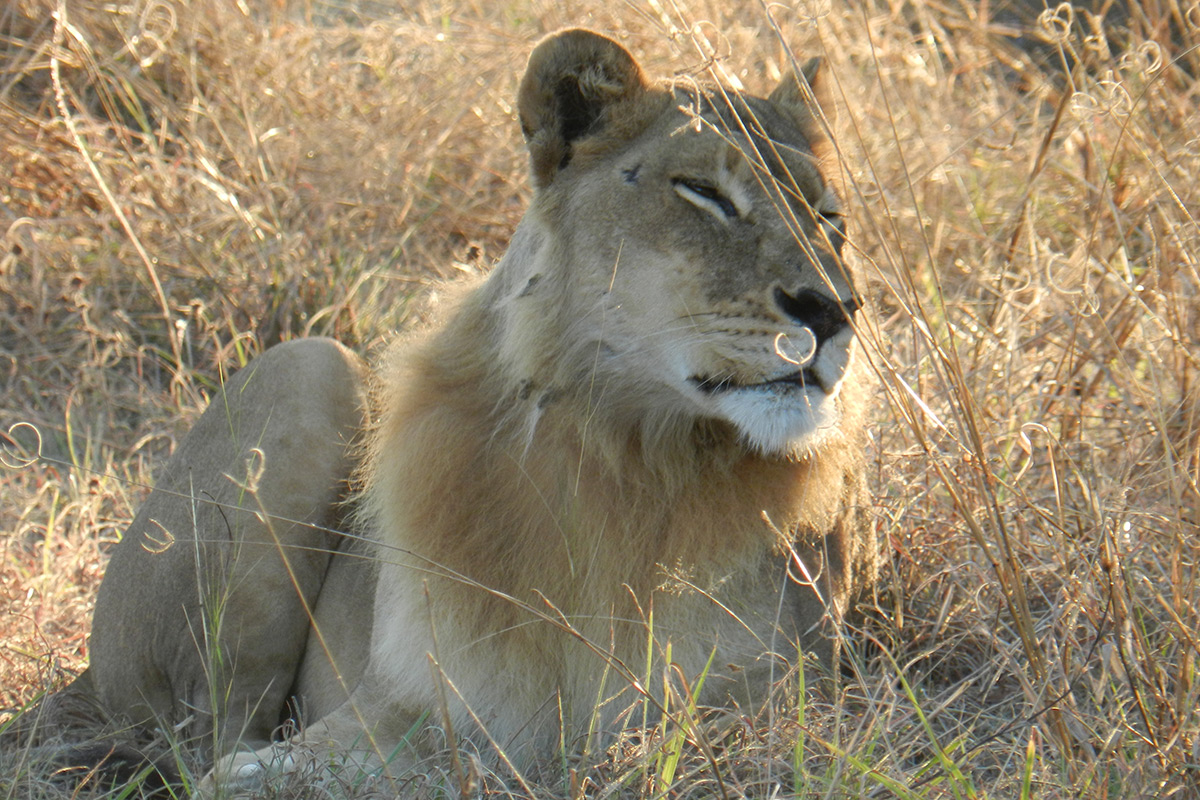
Five wild lionesses grow a mane and start acting like males

Lioness with dart

Simon Dures

By Karl Gruber

This lion king (pictured above) is a queen. And she’s not the only one.

Five lionesses in Botswana have grown a mane and are showing male-like behaviours. One is even roaring and mounting other females.

Advertisement

Male lions are distinguished by their mane, which they use to attract females, and they roar to protect their territory or call upon members of their pride. Females lack a mane and are not as vocal.

But sometimes lionesses grow a mane and even behave a bit like males. However, until now, reports of such maned lionesses have been extremely rare and largely anecdotal. We knew they existed, but little about how they behave.

Now, Geoffrey D. Gilfillan at the University of Sussex in Falmer, UK, and colleagues have reported five lionesses sporting a mane at the Moremi Game Reserve in Botswana’s Okavango delta.

Gilfillan started studying these lionesses back in March 2014, and for the next two years he focused on recording the behaviour of one of them, called SaF05. She had an underdeveloped mane and was larger than most females.

“While SaF05 is mostly female in her behaviour – staying with the pride, mating males – she also has some male behaviours, such as increased scent-marking and roaring, as well as mounting other females,” says Gilfillan.

“Although females do roar and scent-mark like males, they usually do so less frequently,” he says. “SaF05, however, was much more male-like in her behaviour, regularly scent-marking and roaring.”

Lioness with shaggy hairs aound neck

Jessica Vitale

A likely explanation is an increased level of testosterone as these lionesses mature, says Luke Hunter, president and chief conservation officer at the global wild cat conservation organisation Panthera.

In lions, testosterone directly affects the development of manes. Castrated males, for example, lose their ability to produce testosterone and promptly lose their mane, too.

In 2011, a captive lioness called Emma at the National Zoological Gardens of South Africa developed a mane. Tests revealed high levels of testosterone due to a problem in her ovaries, and once they were removed she reverted to a typical lioness.

The idea that testosterone is implicated in the Botswana lionesses is also backed by observations of their reproductive success, says Kathleen Alexander at Virginia Tech in Blacksburg.

“While some of the maned lionesses were observed mating, none of them became pregnant, suggesting they are infertile, a known consequence of high levels of androgens such as testosterone in females,” she says. “The behavioural changes suggest this is likely the case.”

Hunter suspects this explanation applies to the animals studied by Gilfillan and his colleagues. “Given all five known maned females come from the Okavango region, there must be a genetic component in this population underlying the phenomenon,” he says.

Interview: We’re growing living walls to save lions

“I don’t think this is anything to be concerned about,” says Hunter. “Although the females are apparently infertile, they otherwise appear to live long, healthy lives. And from a conservation perspective, there is nothing to suggest the pattern is increasing or will ever be anything more than a rare, local phenomenon.”

No one seems to be studying the exact genetic and hormonal causes of this phenomenon at the moment. “I guess there are just one or a few genes altered,” says Vincent Savolainen at Imperial College London, who had a student briefly work on the possible causes. “I believe some masculinised genes have been documented in domesticated cats – it would be good to look into this, especially given that the cat genome is available as reference.”

Could the masculinised females in fact be a boon to the pride when it comes to competing with other prides? It’s possible, it seems.

Gilfillan says he once saw SaF05 bring down a zebra. “A neighbouring pride stole the zebra from SaF05, but in return SaF05 killed two of their cubs.”

Cub-killing behaviour is rare in females but common in males.

Journal reference: African Journal of Ecology, DOI: 10.1111/aje.12360

Fish recorded singing dawn chorus on reefs just like birds

Bat fish sing from the same song sheet
Bat fish ballad

Norbert Probst/Getty

By Greta Keenan 

The ocean might seem like a quiet place, but listen carefully and you might just hear the sounds of the fish choir.

Most of this underwater music comes from soloist fish, repeating the same calls over and over. But when the calls of different fish overlap, they form a chorus.

Robert McCauley and colleagues at Curtin University in Perth, Australia, recorded vocal fish in the coastal waters off Port Headland in Western Australia over an 18-month period, and identified seven distinct fish choruses, happening at dawn and at dusk. You can listen to three of them here:

Advertisement
https://d1o50x50snmhul.cloudfront.net/wp-content/uploads/2016/09/19155206/threechoruses.wav

The low “foghorn” call is made by the Black Jewfish (Protonibea diacanthus) while the grunting call that researcher Miles Parsons compares to the “buzzer in the Operation board game” comes from a species of Terapontid. The third chorus is a quieter batfish that makes a “ba-ba-ba” call.

“I’ve been listening to fish squawks, burble and pops for nearly 30 years now, and they still amaze me with their variety,” says McCauley, who led the research.

New Scientist Live: Book tickets to our festival of ideas and discovery – 22 to 25 September in London

Sound plays an important role in various fish behaviours such as reproduction, feeding and territorial disputes. Nocturnal predatory fish use calls to stay together to hunt, while fish that are active during the day use sound to defend their territory. “You get the dusk and dawn choruses like you would with the birds in the forest,” says Steve Simpson, a marine biologist at the University of Exeter, UK.

The recordings were captured by two sea-noise loggers: the first positioned near the Port Headland shore and the second 21.5 kilometres away in offshore waters.

“This is a method that allows us to understand what’s happening at Port Headland 24/7 for a year and a half,” says Simpson. “I don’t know any scuba diver that can stay down there that long!”

Listening to choruses over a long period of time allows scientists to monitor fish and their ecosystems, particularly in low visibility waters, such as those off Port Headland.

“We are only just beginning to appreciate the complexity involved and still have only a crude idea of what is going on in the undersea acoustic environment,” says McCauley.

Journal reference: Bioacoustics, DOI: 10.1080/09524622.2016.1227940

Read more: Ocean commotion: Protecting sea __life from our noise

Wednesday, June 17, 2015

Paris bookstore disappear


The booksellers has been a staple of Parisian culture for centuries, known as a go-to supply exhausted or unusual reading material - but their life is threatened.

An office with a view (Credit: Credit: Nick Kozak)

An office with a view


One of the most important monuments of Paris are the famous bookshops: booksellers who sell their products every day along the River Seine. Bargaining dates to 1400, the booksellers have been known for centuries as a go-to source for reading material exhausted or rare among locals and travelers who come here to find titles like in Vagrant author Colette biting and controversial or the first edition of the French comic strip The Mischievous Lili, from the early 1900s and has never been reissued. The cultivation of about 20 vendors at the turn of the 17th century, there are now about 240 booksellers in Paris. Their traditional green wooden boxes that dot both banks of the Seine, the Musée d'Orsay in the Arab World Institute, with the highest concentration is at the entrance of the Latin Quarter, home of the famous Sorbonne University. (Credit: Nick Kozak)


The traveller challenge (Credit: Credit: Nick Kozak)

The traveller challenge

But even with 240 vendors lining the banks, competition does not come often in close positions. The 'booksellers biggest challenge over the past 20 years has been the proliferation of e-readers and Internet access, reducing sales of books and make materials outside the print easier to find. To offset declining sales, many have resorted to booksellers supplement their income with memories, which are technically permitted under the regulations of the city that allows the sale of commercial products from four green boxes is assigned to each vendor. But the movement did not sit well with some of the Items population, triggering a debate between suppliers in about what can and can not sell - and it will change a tradition that has been a staple of the Parisian culture. (Credit: Nick Kozak)

The price of growth (Credit: Credit: Nick Kozak)

Price growth

At the end of 1980, Jean-Pierre Mathias left his job as professor of philosophy to become a bookseller. "When I came to my store, I started selling my old books ... I liked the idea of ​​following the philosophy here without having to be a teacher," he said. Mathias only sells books and engravings; He refused to comply with the increasing number of foreign tourists selling souvenirs. "For me, a book will always be a book, and people who love books continue to buy them. The theater did not disappear with the beginning of the film, "he says with a big smile (Credit: Nick Kozak).

From comics to keychains (Credit: Credit: Nick Kozak)

From comics to keychains

Robert Francis was selling comics in his shop for over 35 years. At first, he said, people came to him, if you were looking for a particular comic story. If you do not, then they do online would. Now it is the opposite: they only come if they can not find online. To compensate, Robert memorabilia collection - including ubiquitous statues Eiffel Tower - has increased in recent years. As residents still come to buy a book or two, he said most of his customers are abroad and are more likely to buy his memories of his comics, which are mainly written in French. (Credit: Nick Kozak)


A job with benefits (Credit: Credit: Nick Kozak)

A job with benefits

Items Each is required to maintain their boxes, but beyond that, the work has a lot of freedom. Merchants can set their own hours of light (the stalls are locked once the sun sets); choose the reading material they want to sell; and spend the day enjoying the best views of Paris. Yet many booksellers believe that the city should do more to support tradition as lower sales. One suggestion is that the sellers of electricity installed so it can expand its hours of the night. (Credit: Nick Kozak)

Standing strong (Credit: Credit: Nick Kozak)

Standing strong

Bernard Carver entered the business of selling rare books, 20 years after the arrival of Lebanon without much money. Soon he began living on the streets, he said, and chose comfort in books instead of alcohol. Passion, it binds with certain booksellers. To sell their products, he said, you must be familiar with, boasting that he read everything on your shelf. But even that did not stop the decline in sales, and expressed his anger to the proliferation of sold trinkets. Some marketers have even added folding tables in front of their stalls to expand its collection of memories - a tactic not covered by the regulations of the city. (Credit: Nick Kozak)

A creative solution (Credit: Credit: Nick Kozak)

A creative solution

Many booksellers selling trinkets made in China, including the Eiffel Tower key chains and mugs I love Paris. One of the young traders, George Roman, chose instead to sell antique prints ads created by him and his father, and paintings by students of the prestigious Ecole des Beaux-Arts, conveniently located just behind his store. Therefore, he said, he can sell souvenirs that are made both in France and linked to local culture - a solution, perhaps, taking the best of both worlds. (Credit: Nick Kozak


Tuesday, June 16, 2015

Hippos, bears and lions run wild after flood hits zoo in Georgia

(Image: Beso Gulashvili/Georgian Prime Minister's Press Service/EPA)

No you're not seeing things, that really is a hippo strolling down the road. After a major flood in Tbilisi, Georgia, on Sunday, which killed 12 people, several parts of the city zoo were destroyed, allowing animals to escape and take to the streets. Three zoo workers were among the dead.

The hippo was later shot with a tranquiliser dart while several other runaways were killed because of safety concerns, including six wolves, a boar, a tiger, a lion and a hyena.

City authorities were on the lookout for 32 predators. Many monkeys and a few lions were reported missing.

(Image: Beso Gulashvili/Georgian Prime Minister's Press Service/EPA)

A bear was spotted balancing on a windowsill (see picture, above). It was among eight bears that took to the streets after their enclosure was demolished. Rescuers in an inflatable boat gathered below to try to help the animal.

Residents were asked not to leave their homes, but there have been no reports of animal attacks so far. Police have been using helicopters, as well as searching the city on foot, to hunt down the escapees.

The flood occurred after strong winds and heavy rain hit the city, causing the Vere river to overflow. Models are predicting that extreme floods will increase dramatically in the coming decades because of climate change.

If you would like to reuse any content from New Scientist, either in print or online, please contact the syndication department first for permission. New Scientist does not own rights to photos, but there are a variety of licensing options available for use of articles and graphics we own the copyright to.

post from sitemap